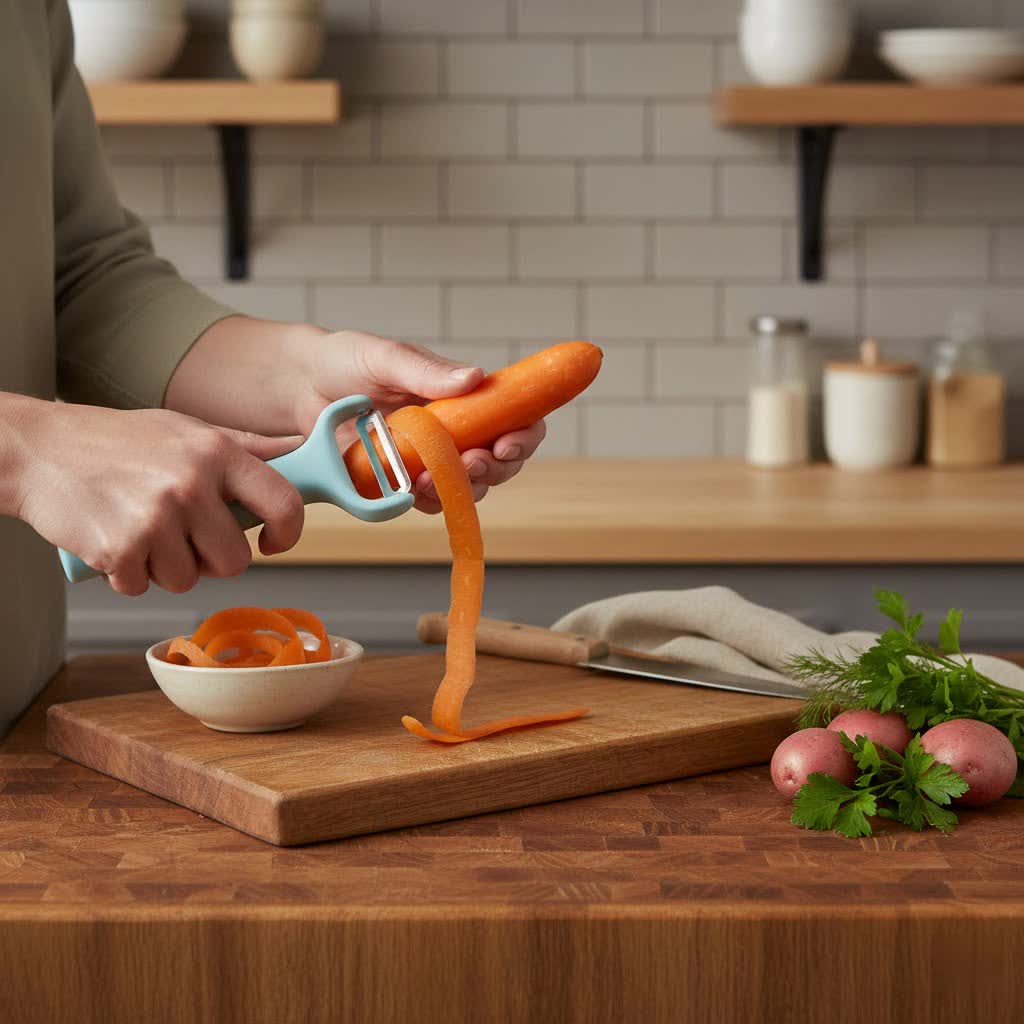
In the demanding world of professional kitchens, every tool must earn its place. Efficiency, precision, and endurance are not just desirable traits but absolute necessities. While countless kitchen gadgets promise to revolutionize food preparation, one unassuming implement consistently stands out for its profound impact on culinary professionals: the Y-peeler. This seemingly simple tool, with its distinctive horizontal blade and perpendicular handle, has become an indispensable staple, preferred by chefs globally for its unparalleled ability to transform laborious peeling tasks into swift, ergonomic operations. Delving into the design and functional advantages of the Y-peeler reveals exactly why it holds such a revered position, offering a blend of speed, control, and comfort that other peeler styles simply cannot match.
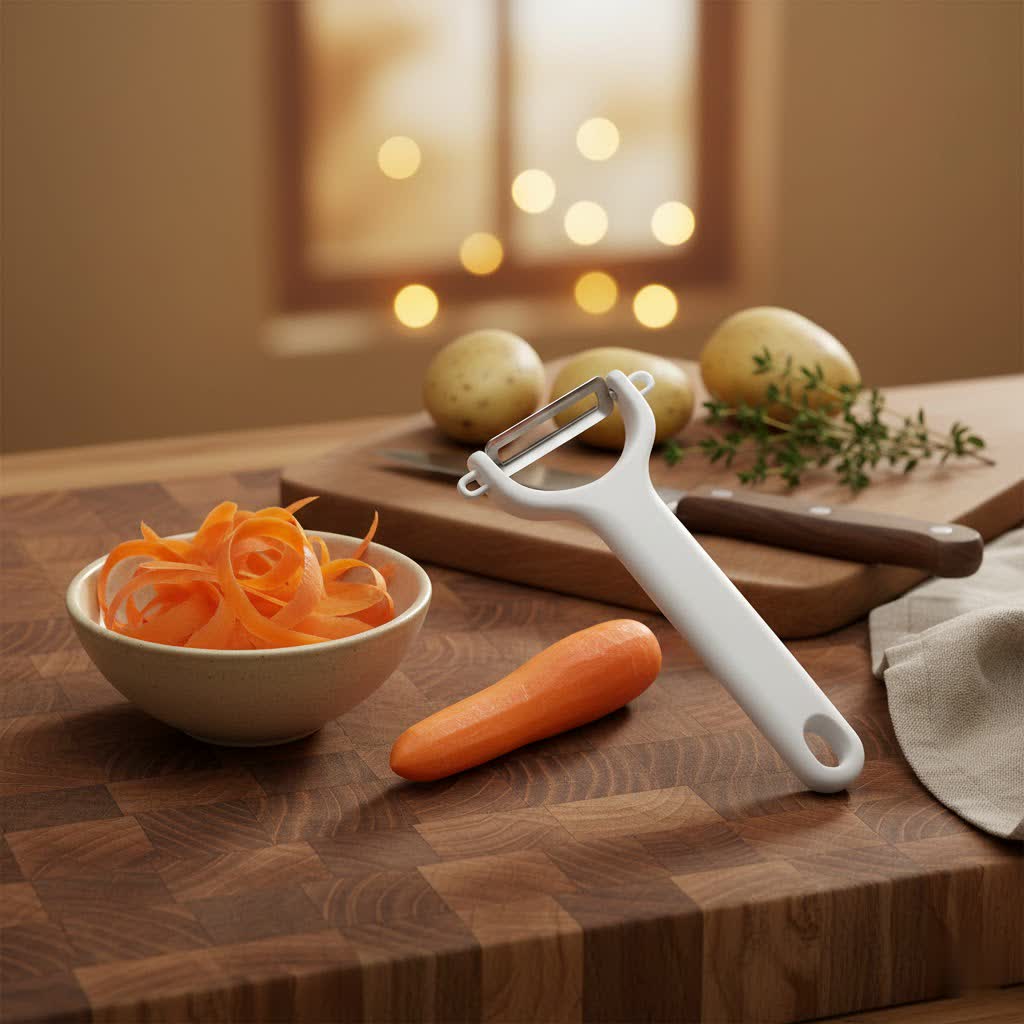
Understanding the Dominance of Y-Peelers in Professional Kitchens
The Y-peeler’s design, resembling the letter ‘Y’, positions its blade perpendicular to the handle. This unique orientation is not merely an aesthetic choice; it’s a foundational element of its superior performance. For chefs tackling mountains of vegetables daily, the Y-peeler offers immediate advantages in both speed and comfort, making it a natural fit for high-volume kitchen environments.
The Ergonomic Advantage: Reducing Strain in High-Volume Prep
Table is empty.One of the most compelling reasons professional chefs gravitate towards the Y-peeler is its exceptional ergonomics. When performing repetitive tasks for hours, tools must minimize physical strain, and the Y-peeler excels here. Its design promotes a natural wrist alignment, allowing users to apply pressure with their arm and shoulder rather than relying solely on wrist strength. This significantly reduces fatigue and the risk of repetitive strain injuries, crucial for a chef’s long-term career. The comfortable grip, often enhanced with non-slip materials, ensures stability and control, contributing to safer, more efficient peeling sessions, even during the busiest service.
Unmatched Speed and Efficiency for Professional Demands
In a professional kitchen, time is always of the essence. The Y-peeler’s horizontal blade facilitates powerful, broad strokes, stripping away wide swathes of skin with each pass. This efficiency is particularly evident when working with large or tough-skinned produce such as potatoes, butternut squash, or sweet potatoes, where rapid processing is paramount. Unlike other designs, the Y-peeler allows for versatile peeling motions, whether a swift pull-stroke towards the body or a push-stroke away, adapting effortlessly to different produce shapes and sizes. Many Y-peelers also integrate a pointed tip for quickly removing potato eyes or blemishes, further streamlining the workflow and eliminating the need for a separate paring knife, ensuring a clean and continuous prep process.
 A professional chef rapidly peeling potatoes with a stainless steel Y-peeler in a busy kitchen setting, emphasizing speed and efficiency
Y-Peeler vs. Other Peeler Types: A Chef’s Perspective
While a variety of peeler designs exist, professional chefs often develop a clear preference for the Y-peeler when considering overall utility and performance in a demanding environment. Understanding the distinctions between the primary types—Y-peelers, swivel peelers, and serrated peelers—highlights why the Y-peeler often emerges as the workhorse of the professional kitchen.
Y-Peeler
Pros:
- Speed and Power: The horizontal blade allows for quick, powerful strokes, ideal for high-volume peeling of dense or large vegetables.
- Ergonomics: Natural wrist alignment reduces strain and fatigue during prolonged use, enhancing comfort and safety.
- Control: Offers superior control, reducing slips and allowing for precise skin removal with minimal waste.
- Versatility: Excellent for a wide range of produce, from firm root vegetables to delicate fruits, and even for shaving hard cheeses or chocolate.
- Integrated Features: Many models include a pointed tip for removing blemishes or potato eyes, streamlining tasks.
Cons:
- Some models may be less universally comfortable for left-handed users if the handle is not symmetrical, though many designs are ambidextrous.
Swivel (Straight) Peeler
Pros:
- Contour Following: The blade pivots, allowing it to conform closely to irregular or curved surfaces, which can be beneficial for specific produce like apples or smaller, round vegetables.
- Precision: Excels at taking off very thin, delicate strips of peel, minimizing waste.
- Universal Use: Typically designed to be comfortable for both right and left-handed users due to its linear handle.
Cons:
- Slower for Volume: The design can be less efficient for peeling large quantities of produce or those with tougher skins.
- Wrist Engagement: May require more subtle wrist movements, potentially leading to increased fatigue during extended use.
- Limited Power: Less effective for thick or fibrous skins compared to the Y-peeler’s more direct power application.
Serrated Peeler
Pros:
- Delicate Skins: Specifically designed for soft-skinned fruits and vegetables such as tomatoes, peaches, kiwis, or bell peppers, where a smooth blade might slip or tear the flesh. The serrations gently grip and slice through the skin.
- Reduced Damage: Minimizes bruising or crushing of delicate produce.
Cons:
- Specialized Use: Not a general-purpose peeler; its serrated edge is less effective on firm or tough-skinned items.
- Durability: Serrated blades can dull faster or be more challenging to sharpen than straight-edged blades.
Table: Detailed Comparison of Peeler Types
| Feature | Y-Peeler | Swivel (Straight) Peeler | Serrated Peeler |
|---|---|---|---|
| Blade Orientation | Horizontal, perpendicular to handle | Vertical, parallel to handle | Vertical or Horizontal, serrated edge |
| Primary Use | High-volume, large/tough vegetables | General-purpose, long/narrow, curved produce | Delicate, soft-skinned produce |
| Ergonomics | Excellent for power, reduced wrist strain | Good for precision, adaptable blade | Specialized grip for delicate tasks |
| Speed | Fastest for large quantities | Moderate, precise | Moderate, avoids tearing |
| Control | High, stable grip | High, adaptable | Good, prevents slippage on soft skins |
| Waste | Minimal, thin peels | Minimal, very thin peels | Minimal, careful skin removal |
| Best For | Potatoes, squash, carrots, beets | Cucumbers, zucchini, apples, firm vegetables | Tomatoes, peaches, kiwis, bell peppers |
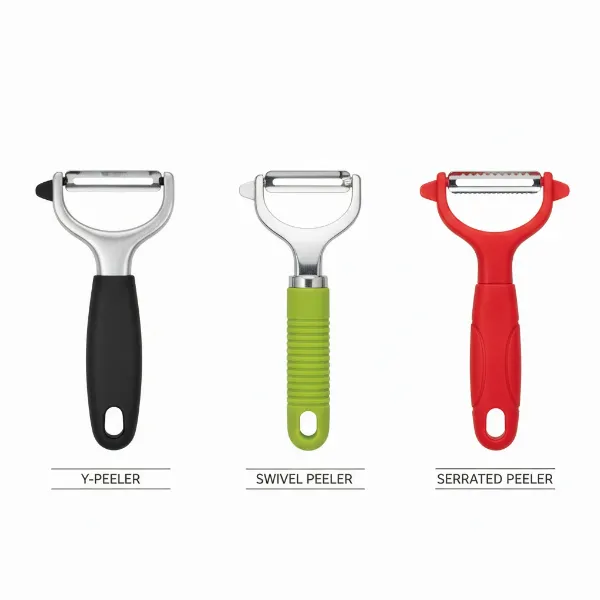 A clear side-by-side comparison of a Y-peeler, a swivel peeler, and a serrated peeler, highlighting their distinct designs
How to Choose the Best Y-Peeler for Your Culinary Needs (Buying Guide)
Selecting the right Y-peeler goes beyond basic functionality for a professional. It involves a discerning eye for materials, design, and thoughtful features that impact daily use and longevity. Just as a chef chooses their knives with care, a Y-peeler warrants similar consideration.
Essential Features for a Professional-Grade Y-Peeler
When investing in a Y-peeler for a demanding kitchen, several factors contribute to its overall quality and suitability:
- Blade Material: The performance of any peeler hinges on its blade.
- Carbon Steel: Highly prized for its exceptional sharpness and ability to maintain a keen edge. While it may require more careful maintenance to prevent rust, its cutting efficiency is often unmatched.
- Stainless Steel: A popular choice for its durability, corrosion resistance, and ease of cleaning, often being dishwasher safe. High-quality stainless steel blades can remain sharp for years.
- Ceramic: Known for extreme sharpness and rust-proof properties, ceramic blades are brittle and require careful handling. They typically demand professional sharpening when dull.
- Handle Design: An ergonomic handle is paramount for comfort and safety during extended use. Look for designs that fit naturally in the hand, offering a secure, non-slip grip, even when wet. Materials like soft-touch plastics or textured rubber can significantly enhance user experience, reducing hand fatigue.
- Durability and Longevity: A professional-grade peeler should withstand rigorous daily use. This means robust construction, securely attached blades that won’t loosen, and materials that resist wear and tear. While peelers are often considered affordable, a durable model reduces the frequency of replacement.
- Additional Features: A common and highly valuable addition is a built-in potato eye remover. This small, sharp scoop or point at the side of the peeler allows for quick removal of blemishes without switching tools, further streamlining preparation.
“In the fast-paced kitchen environment, a peeler isn’t just a tool; it’s an extension of the chef’s hand. Its ergonomics and efficiency directly impact productivity and, crucially, a chef’s physical well-being over long shifts.” – Chef Antoine Dubois, Head Chef at Le Gourmet Bistro
Expert Tips for Maximizing Your Y-Peeler’s Performance
Even the best Y-peeler performs optimally with proper technique and care.
- Mastering the Grip: For large, firm vegetables like potatoes or squash, hold the produce firmly in one hand and the peeler in the other, with your thumb and index finger often placed on opposite sides of the peeler’s head for maximum leverage and control. For rounder items, wrap your hand around the handle, using your thumb on the produce to guide the blade along its natural curve.
- Directional Peeling: Y-peelers allow for both pulling and pushing strokes. Experiment to find which motion feels most natural and efficient for different types of produce. Many chefs find pulling strokes more controlled, while pushing strokes can be faster for certain tasks.
- Maintenance and Care: Keep your peeler clean and dry to prevent rust, especially with carbon steel blades. While some chefs treat peelers as disposable tools, particularly inexpensive models, high-quality Y-peelers can last for years with proper care. Regularly inspect the blade for dullness or damage; a dull peeler is inefficient and can be more dangerous.
- Smart Storage: Store your Y-peeler in a knife block, a drawer organizer, or with a blade cover to protect the blade and prevent accidental cuts.
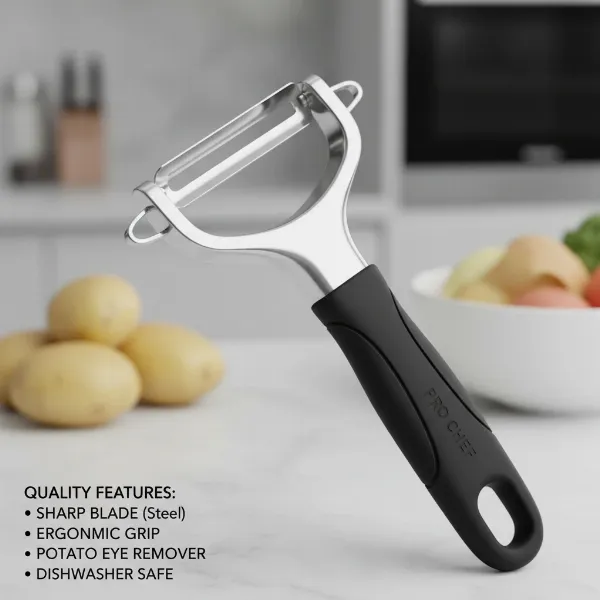 A close-up of a Y-peeler highlighting its sharp blade, ergonomic handle, and potato eye remover, demonstrating key features for selection
Top Y-Peelers Recommended by Culinary Experts
While personal preference plays a role, certain Y-peeler models consistently receive high marks from professional chefs and culinary reviewers for their exceptional performance and durability.
Kuhn Rikon Original Swiss Peeler
This iconic peeler is often found in professional test kitchens and bustling restaurant environments worldwide. Renowned for its minimalist design, incredibly sharp carbon steel blade, and remarkably low price point, it’s a true workhorse. Chefs appreciate its lightweight feel and comfortable, short handle, which allows for precise control and swift peeling motions, especially when peeling directly over a waste bin. Despite its affordability, it consistently delivers clean, efficient peels.
OXO Good Grips Pro Y-Peeler
The OXO Good Grips Pro Y-Peeler stands out for its robust construction and ergonomic excellence. Featuring a sharp stainless steel blade and a signature soft, non-slip handle, it offers a secure and comfortable grip that reduces strain during extended use. Its ability to peel smoothly in both directions enhances efficiency, making it a favorite for chefs who value both comfort and speed. The sturdy design ensures long-lasting performance, cementing its place as a reliable tool in any professional setting.
Other Notable Mentions
Beyond these staples, other high-performing Y-peelers include the Linden Sweden Original Jonas Peeler, praised for its smooth peeling action and clean results, and specialized wide Y-peelers from brands like OXO, which are ideal for handling oversized vegetables like cabbage or large squashes.
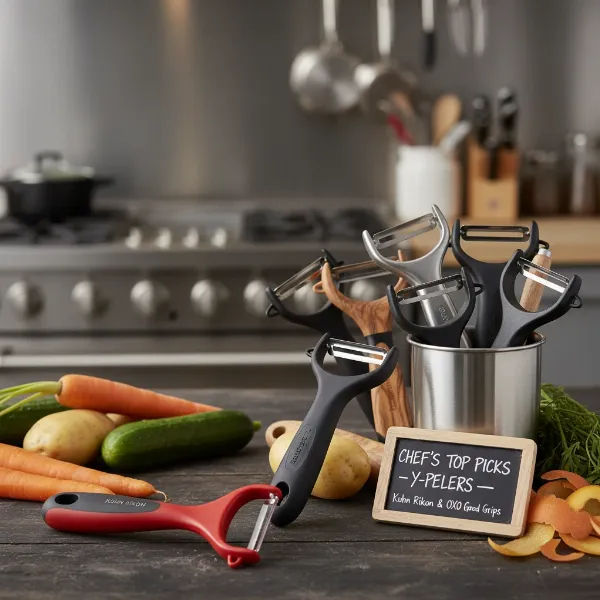 A collection of top-rated Y-peelers, including Kuhn Rikon and OXO models, arranged on a kitchen counter, representing expert recommendations
Professional chefs choose Y-peelers not out of tradition, but because their design inherently meets the rigorous demands of a busy kitchen. From their ergonomic comfort and superior control to their unmatched speed and versatility, Y-peelers are engineered for performance. They allow culinary professionals to execute precise, high-volume prep tasks with greater efficiency and less fatigue, ultimately contributing to the seamless flow and quality of a professional kitchen. Investing in a high-quality Y-peeler is more than just buying a tool; it’s empowering a chef to work smarter, faster, and more comfortably. What essential kitchen tool has transformed your culinary routine?
Frequently Asked Questions
Why do some chefs prefer a knife over a peeler?
While peelers are generally faster and safer for volume, some chefs might use a small, sharp paring knife for specific tasks requiring extreme delicacy, intricate garnishes, or when squaring off vegetables before dicing, where precise control over thickness removal is paramount.
Can Y-peelers be sharpened?
Many Y-peeler blades, especially those made of carbon or stainless steel, can be sharpened, either with a specialized peeler sharpener, a sharpening steel, or by a professional. However, due to their affordable price, many professional kitchens opt to replace them when dull for efficiency.
Are Y-peelers suitable for left-handed users?
Many modern Y-peeler designs are ambidextrous, offering comfortable use for both left and right-handed individuals. However, some older or less symmetrically designed models might feel awkward for left-handed users, making it important to check for specific left-hand friendly features or test the grip.
What’s the best way to clean a Y-peeler?
Most Y-peelers, particularly those with stainless steel blades and plastic handles, are dishwasher safe. For carbon steel blades or wooden handles, hand washing with warm, soapy water and immediate drying is recommended to prevent rust and preserve blade integrity.
How often should a professional chef replace their Y-peeler?
In a professional setting, a Y-peeler might be replaced every few months to a year, depending on usage frequency and blade material. While high-quality models can last longer, the cost-effectiveness and critical need for a consistently sharp blade often make regular replacement a practical choice for maintaining efficiency and safety.