The humble potato is a cornerstone of kitchens worldwide, offering endless culinary possibilities. Yet, even this versatile vegetable can present a minor challenge: those pesky “eyes” or sprouts. While easily overlooked, these small blemishes can impact both the appearance and safety of your dishes. Fortunately, many home cooks possess the perfect tool for the job, often without realizing its full potential: the small, specialized tip found on most vegetable peelers. This seemingly minor feature is, in fact, your secret weapon for efficient and precise potato eye removal.

This article will guide you through understanding why removing potato eyes is important, how to effectively utilize your peeler’s built-in tool, and provide expert tips to ensure your potato preparation is flawless, safe, and waste-free. Get ready to elevate your potato game by mastering this simple kitchen hack.
Understanding Potato Eyes: Why Remove Them?
Those small bumps or green spots on your potatoes, commonly referred to as “eyes,” are actually tiny sprouts – the potato’s attempt to grow new plants. While a natural part of the potato’s lifecycle, they signal a change in the vegetable’s composition that can have implications for both taste and health.
The primary concern with potato eyes, particularly larger sprouts and green areas, is the presence of natural toxins called glycoalkaloids, predominantly solanine and chaconine. These compounds develop as potatoes age and are exposed to light. In small amounts, they are usually harmless, but concentrated levels can lead to symptoms like gastrointestinal distress, headaches, or nausea. For minor, nascent eyes on firm, unblemished potatoes, simply removing the sprout is sufficient. However, if a potato is soft, shriveled, or has extensive greening or large sprouts, it’s generally safest to discard it entirely, as the toxins may have spread throughout the flesh. Removing these imperfections also contributes to a more appealing final dish, ensuring smooth textures and an inviting presentation.
Your Peeler’s Secret Weapon: The Eye Remover Tip
Many home cooks have used a vegetable peeler countless times for its primary function, yet remain unaware of the ingenious little tool integrated into its design. Whether it’s a pointed notch, a small hook, or a circular scoop, this feature is specifically engineered to tackle potato eyes and other small blemishes with remarkable precision. Often situated at the top or side of the peeler, this “potato eyer” or “blemish remover” is far more effective and safer than attempting to dig out imperfections with the edge of the peeler blade itself or, even worse, the tip of a paring knife.
Unlike a knife, which can encourage over-cutting and lead to unnecessary waste, the peeler’s tip is designed to scoop out a minimal amount of potato around the eye, preserving more of the edible flesh. Its specialized shape allows for quick, clean removal, making the task less cumbersome and significantly reducing the risk of accidental nicks or cuts. Both the classic swivel peeler and the ergonomic Y-peeler designs commonly incorporate this indispensable feature, making it a ubiquitous and accessible kitchen aid.
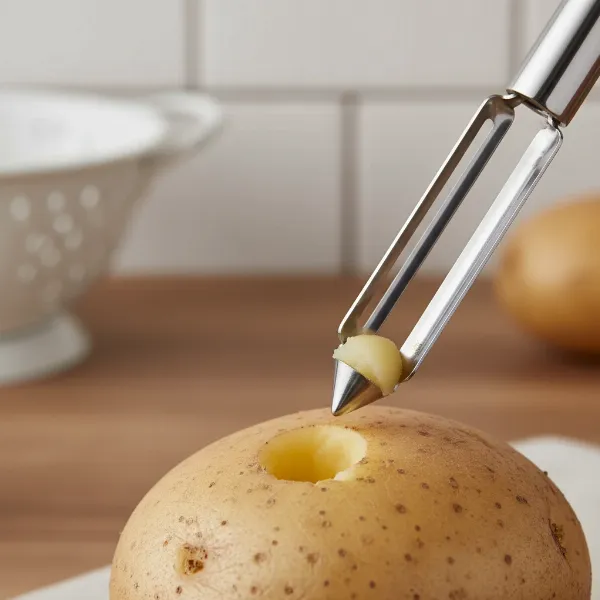 Close-up view of a peeler's eye remover tip extracting a potato eye with precision
Step-by-Step Guide: Removing Potato Eyes with Precision
Mastering the use of your peeler’s eye remover tip is a simple skill that can significantly improve your potato preparation. Follow these steps for precise and efficient removal:
- Prepare Your Potato: Begin by thoroughly washing your potato under cold water to remove any dirt. Ensure your potato is firm to the touch; if it’s soft, shriveled, or has significant green spots, consider discarding it.
- Identify the Eye: Locate the potato eye, dark spot, or sprout you wish to remove. It might be a small dimple or a noticeable protrusion.
- Position the Peeler Tip: Hold the potato firmly in one hand. With the other hand, orient your peeler so that the small, pointed or hooked tip is directly over the potato eye. You might need to rotate the peeler, often flipping it over, to comfortably align the tip with the blemish.
- Apply Gentle Pressure: Press the peeler tip gently but firmly into the potato around the edge of the eye. The goal is to encircle the imperfection.
- Twist or Scoop: With a slight twisting motion or a gentle scoop, leverage the curved edge of the tip to lift the eye out. The design of the tool naturally helps to carve out a small, conical piece of potato containing the eye. This motion should be controlled and deliberate, rather than forceful digging.
- Verify Removal: Inspect the area to ensure the entire eye has been removed. If a small part remains, repeat the process carefully.
- Minimize Waste: The beauty of the peeler tip is its ability to remove only the necessary portion, leaving the majority of the potato intact. Practice will make this motion even more fluid and waste-efficient.
Expert Tips for Flawless Potato Preparation
Beyond the basic technique, a few expert insights can further enhance your potato preparation and ensure food safety.
> “The peeler’s eye remover is an unsung hero in the kitchen. It’s designed for efficiency and safety, reducing the need for multiple tools and minimizing waste. A sharp tip makes all the difference for a clean scoop.” – Chef Isabella Rossi, Culinary Instructor & Kitchen Gadget Specialist
- Prioritize Safety First: Always work with a stable grip on both the potato and the peeler. Perform the scooping motion away from your body and fingers to prevent any accidental slips or cuts. A clean, dry potato is also easier to handle securely.
- Maintain a Sharp Tip: Just like the main blade, the potato eye remover works best when it’s sharp and free of debris. Ensure your peeler is regularly cleaned and stored properly to maintain its efficacy. A dull tip will struggle to scoop cleanly, leading to more effort and potential waste.
- Optimal Potato Storage: The best way to reduce the need for eye removal is to prevent sprouting in the first place. Store potatoes in a cool, dark, and dry place, such as a pantry or cellar, ideally between 45-55°F (7-13°C). Avoid storing them with onions, as the gases released by onions can accelerate potato sprouting.
- Don’t Ignore Green Spots: Any green discoloration on a potato indicates increased levels of solanine. While the peeler tip is great for eyes, green areas often require a more thorough peeling or cutting away with the main blade, or even discarding the potato if the greening is extensive.
- Beyond Potatoes: While primarily known for potatoes, the peeler’s pointed tip can also be useful for other delicate tasks, such as removing the hulls from strawberries or even de-seeding small peppers, showcasing its versatile design.
Common Mistakes to Avoid When Removing Potato Eyes
Even with the right tool, certain practices can hinder your efficiency or compromise the quality of your prepared potatoes. Being aware of these common pitfalls can help you avoid them.
One frequent mistake is using a paring knife for every eye. While a paring knife can certainly remove potato eyes, it often leads to less precise cuts, removes more edible potato flesh than necessary, and can be less safe due to the sharper, larger blade. The peeler tip is specifically shaped for this task, offering superior control and minimal waste.
Another error is digging too deep into the potato. The eye remover is designed to take out a shallow, conical section. Excessive force or depth means you’re removing more potato than needed, contributing to food waste. Trust the tool’s design to do the work with a gentle touch.
Ignoring the condition of the potato itself is a critical mistake. While removing small eyes is perfectly fine, attempting to salvage potatoes that are soft, shriveled, or heavily greened, even after removing the visible eyes, is not advisable. These signs indicate a higher concentration of toxins throughout the potato, making it unsafe to consume. Always discard compromised potatoes.
Finally, neglecting to clean the peeler tip after each use can lead to residue buildup, dulling the edge and making future eye removal less effective. A quick rinse or wipe ensures your tool is always ready for its next task.
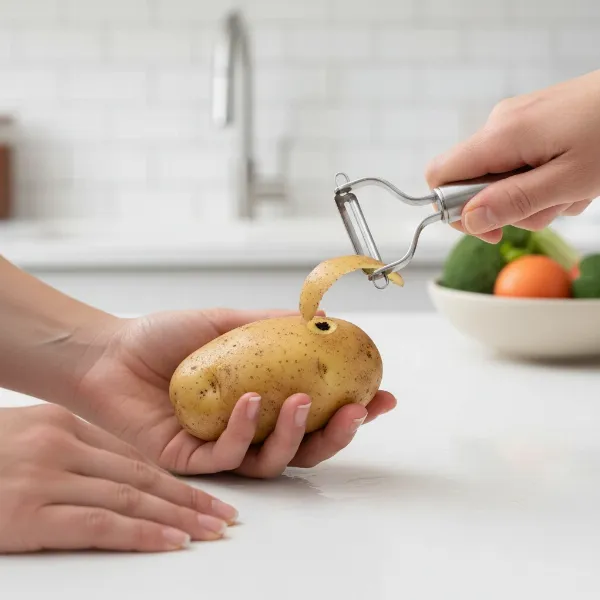 A hand using a Y-peeler to remove a small blemish from a potato, showing a clean, precise cut
Conclusion
The humble potato peeler is more than just a tool for stripping skins; its often-overlooked tip is a brilliantly simple solution for tackling those challenging potato eyes. By understanding the purpose of this specialized feature and adopting a few easy techniques, you can ensure your potatoes are not only perfectly prepared and aesthetically pleasing but also safe to eat. This small detail can make a big difference in your kitchen routine, saving you time, reducing waste, and enhancing your culinary confidence.
So, next time you reach for a potato, take a moment to appreciate the complete functionality of your peeler. A little knowledge about this versatile kitchen essential can transform your food preparation. What other hidden functionalities might your everyday kitchen tools possess?
Frequently Asked Questions
Are potato eyes bad for you?
Table is empty.Potato eyes, or sprouts, contain glycoalkaloids like solanine, which can cause digestive upset or headaches if consumed in large quantities. While small eyes on firm potatoes are generally safe once removed, heavily sprouted, green, or soft potatoes should be discarded to avoid potential health risks.
What if my peeler doesn’t have a tip for removing potato eyes?
Most modern vegetable peelers, especially swivel and Y-peelers, include a small pointed notch or scoop for this purpose. If yours lacks one, a small, sharp paring knife can be used cautiously to scoop out the eyes, though it may be less precise and remove more potato flesh.
Can I eat potatoes with small sprouts?
If a potato is firm and not green, you can generally remove the small sprouts with your peeler’s tip or a knife and safely eat the rest of the potato. However, if the sprouts are large, the potato is soft, shriveled, or shows significant greening, it’s best to discard it.
How should I store potatoes to prevent eyes from growing?
To minimize sprouting, store potatoes in a cool, dark, and dry place, such as a pantry or cellar, away from direct sunlight and moisture. Avoid refrigerating them, as this can convert starches to sugars, altering taste and texture. Also, keep them separate from onions, which release gases that can accelerate sprouting.