Are you tired of those stringy, tough ends ruining your beautifully cooked asparagus? Many home cooks grapple with the challenge of preparing asparagus that is uniformly tender from tip to stalk. The secret to unlocking a consistently delicious texture lies in a simple, yet often overlooked, kitchen technique: peeling. This method transforms even the thickest spears into succulent, melt-in-your-mouth delights, drastically enhancing your culinary creations and reducing unnecessary waste.
Asparagus, a beloved herald of spring, brings a fresh, earthy flavor to countless dishes. However, its fibrous outer layer, particularly on the lower half of thicker stalks, can be quite unappetizing. While the traditional “snap” method is common, it often leads to discarding a significant portion of edible asparagus, sometimes up to half the stalk. Peeling offers a more precise and efficient way to remove only the undesirable, woody exterior, leaving you with more tender goodness to enjoy and ensuring that every bite is as pleasant as the last. This article will guide you through the art of peeling asparagus, introduce you to the best tools for the job, and share expert tips to elevate your asparagus preparation.
Why Peeling Asparagus Transforms Your Meals
The primary reason to peel asparagus is to eliminate the tough, fibrous outer skin that can make the lower parts of the stalks chewy and unpalatable. Unlike some vegetables where the skin is thin and edible, asparagus often develops a thick, woody exterior, especially as it matures or if the stalks are particularly thick. This woody layer remains firm even after cooking, creating an inconsistent texture that detracts from the overall dining experience.
By carefully removing this outer layer, you expose the tender, succulent interior of the stalk. This not only ensures that every part of the asparagus is enjoyable but also promotes more even cooking. When the stalks are uniform in texture, they cook through at the same rate, preventing some parts from being overcooked while others remain stubbornly firm. Peeling also significantly reduces food waste compared to snapping, allowing you to salvage a larger portion of each spear and ultimately get more value from your fresh produce. Moreover, peeled asparagus presents a more elegant appearance on the plate, with its smooth, pale green base contrasting beautifully with the vibrant green tip.
Common Peeler Types for Asparagus
Selecting the right peeler can make all the difference in achieving perfectly peeled asparagus. While a sharp paring knife can work in a pinch, a dedicated vegetable peeler is far more efficient and safer. Each type of peeler offers unique advantages, catering to different preferences and needs. Understanding these distinctions will help you choose the best tool for effortlessly prepping your asparagus.
Y-Peeler
The Y-peeler, named for its “Y” shape, features a blade positioned perpendicular to the handle. This design provides excellent control, making it a favorite among many home cooks and professional chefs. The broad handle offers a comfortable grip, which is particularly beneficial when peeling larger quantities of vegetables.
- Pros: Often considered more ergonomic for sustained use, provides excellent control, and its design allows for peeling away from the body, increasing safety. Many find it easier to maneuver on flat surfaces.
- Cons: Some users might find it less adaptable to the curved surfaces of certain vegetables, and it can sometimes be challenging to navigate around irregular shapes.
- How to Use: Hold the asparagus stalk flat on a cutting board. Position the peeler blade just below the tip of the spear and draw it downwards along the stalk, applying gentle pressure. Rotate the asparagus as needed to peel all sides.
- Notable Brands: OXO Good Grips Prep Y-Peeler is a popular choice, known for its comfortable grip and sharp blade.
Swivel Peeler
The swivel peeler, characterized by a blade that pivots, is incredibly versatile and adapts well to the contours of various fruits and vegetables. Its design allows the blade to glide smoothly over uneven surfaces, making it a go-to for many kitchen tasks.
- Pros: The pivoting blade easily follows the curves of vegetables, making it highly versatile for different produce shapes. It’s often praised for its ability to create thin, consistent peels with minimal effort.
- Cons: For those accustomed to the Y-peeler’s rigid blade, the swivel action might initially feel less precise.
- How to Use: Similar to the Y-peeler, lay the asparagus flat. Start just below the tip and glide the swivel peeler down the stalk, letting the blade adjust to the asparagus’s natural shape.
- Notable Brands: The OXO Good Grips Swivel Peeler is highly regarded for its ergonomic handle and consistently sharp performance. The Kuhn Rikon Serrated Piranha Swivel Peeler is also excellent, especially for tougher skins.
Serrated Peeler
Serrated peelers feature a finely toothed blade that excels at gripping delicate or tough skins that a smooth blade might slip over. While they can be found in both Y and swivel designs, their serrated edge is what sets them apart.
- Pros: Exceptionally effective at gripping and removing tough or waxy skins, such as those found on asparagus, tomatoes, or peaches, without crushing the delicate flesh underneath. The serrated edge provides extra traction, preventing slipping.
- Cons: May leave very fine ridges on the peeled surface, though these are typically imperceptible after cooking. Not always ideal for very smooth, thin-skinned produce.
- How to Use: Use the same technique as a Y-peeler or swivel peeler, but allow the serrated blade to gently “saw” through the tough outer layer of the asparagus. The serrations will effectively grab onto the fibrous skin.
- Suitable for: Asparagus, especially thicker stalks with a very woody exterior, as well as fruits with delicate skins like tomatoes.
Dedicated Asparagus Peeler
Some manufacturers offer peelers specifically designed for asparagus, often featuring a narrower, more specialized blade or a unique design to handle the long, slender stalks. These specialized tools aim to optimize the peeling process for asparagus, making it quicker and less wasteful.
- Pros: Engineered for the unique shape and texture of asparagus, these peelers often offer superior efficiency and minimal waste when prepping asparagus. They are designed to remove just the woody outer layer without taking too much of the tender interior.
- Cons: Their specialized nature means they might not be as versatile for other kitchen tasks, potentially making them an additional, single-purpose gadget. Some “feed-through” types can be expensive and remove too much of the spear.
- How to Use: Specific models may have slight variations, but generally, you’ll feed the asparagus through or along a dedicated groove, allowing the blade to shave off the tough skin. Always read the manufacturer’s instructions.
- Notable Brands: The OXO Good Grips Asparagus Prep Peeler is a prime example, featuring a sharp Japanese stainless steel blade with a toothy texture designed for asparagus.
Step-by-Step Guide: How to Perfectly Peel Asparagus Stalks
Achieving beautifully tender asparagus is a straightforward process once you master the technique. Forget the wasteful “snapping” method; precise peeling ensures you get the most out of every stalk. Follow these steps to prepare your asparagus for an unparalleled texture.
1. Trimming the Ends
Begin by rinsing your asparagus under cold water to remove any grit. Then, lay the asparagus spears on a cutting board and align their cut ends. Using a sharp knife, trim off about one inch from the very bottom of each stalk. This removes any dried-out or excessively woody portions that even a peeler might struggle with, providing a clean starting point for peeling.
2. Assessing Stalk Thickness
Not all asparagus needs peeling. Thin, pencil-sized stalks are typically tender throughout and can often be cooked as is, with just a slight trim of the very end. However, if your asparagus spears are thicker—generally 1/2-inch in diameter or more—they are likely to have a tough, fibrous outer layer on the lower two-thirds of the stalk, which benefits greatly from peeling. Separate your thin and thick stalks to streamline the process.
3. Laying Flat for Stability
To prevent the asparagus from bending or snapping during peeling, especially the thinner portions, it’s best to work on a flat, stable surface like a cutting board. Hold the asparagus firmly at the tip with one hand, allowing the thicker base to rest securely on the board. This provides leverage and control, making the peeling process much safer and more efficient.
4. The Peeling Technique
With the asparagus stable on the cutting board, take your chosen vegetable peeler. Start peeling approximately one-third to halfway down from the tip of the spear, where the stalk begins to thicken. Glide the peeler downwards, applying gentle, consistent pressure, moving towards the trimmed end. Rotate the asparagus stalk after each pass to ensure you remove the tough skin evenly around its entire circumference. Aim for thin, delicate strips of peel, exposing the lighter green or whitish interior. Continue peeling until you no longer feel resistance from the tough outer layer.
5. Identifying When Enough is Peeled
You’ll know you’ve peeled enough when the vibrant, lighter green or even white flesh of the asparagus is consistently exposed around the lower part of the stalk. The texture should feel smooth and less fibrous to the touch. The goal is to remove only the tough outer layer, leaving as much of the tender stalk as possible. The very tip and upper portion of the asparagus are naturally tender and do not require peeling.
Comparing Peeler Types for Asparagus
When it comes to selecting the ideal peeler for asparagus, understanding the nuances between different types can help you make an informed decision. Each offers a unique user experience, and what works best often comes down to personal preference and the specific characteristics of the asparagus you’re preparing.
| Peeler Type | Blade Type | Handle Design | Best For | Asparagus Suitability |
|---|---|---|---|---|
| Y-Peeler | Straight, fixed | Ergonomic, often wide | Potatoes, carrots, firm vegetables | Good for thicker stalks on a flat surface, excellent control |
| Swivel Peeler | Pivoting, straight | Ergonomic, comfortable | Most vegetables, curved surfaces | Highly versatile, adapts well to asparagus’s round shape |
| Serrated Peeler | Fixed or pivoting, serrated | Varies | Tomatoes, peaches, tough-skinned vegetables | Excellent for gripping and removing woody asparagus skin |
| Dedicated Asparagus Peeler | Specialized, often serrated | Unique, sometimes narrow | Asparagus, long, slender vegetables | Optimized for asparagus, minimal waste, precise peeling |
Choosing the Right Asparagus Peeler for Your Kitchen
Selecting the perfect peeler for asparagus involves more than just picking the first one you see. Several factors contribute to a peeler’s effectiveness and your overall satisfaction. Consider these elements to find a tool that will make asparagus preparation a joy, not a chore.
Material of the Blade
The blade is the heart of any peeler. Look for blades made from high-quality stainless steel, which resists rust and corrosion while maintaining a sharp edge. Some premium peelers feature Japanese stainless steel, known for its exceptional sharpness and durability. Ceramic blades are also an option, offering incredible sharpness, but they can be more brittle and prone to chipping if dropped. A sharp blade is paramount for smooth, efficient peeling and preventing snagging or tearing the asparagus.
Handle Design and Ergonomics
A comfortable and secure grip is crucial, especially when peeling multiple stalks. Prioritize peelers with ergonomic handles that fit comfortably in your hand, reducing fatigue. Materials like soft-grip rubber or textured plastics provide a non-slip surface, which is invaluable when your hands might be wet. Some designs cater to both right- and left-handed users, ensuring broad accessibility. The balance of the peeler also plays a role; a well-balanced tool feels like an extension of your hand, making precise movements easier.
Durability and Longevity
Investing in a durable peeler means it will withstand repeated use and maintain its performance over time. Look for sturdy construction, with blades securely attached to the handle. Reputable brands often indicate the quality of their materials and manufacturing processes. While a budget-friendly peeler might seem appealing, a slightly higher investment in a well-made tool often pays off in terms of longevity and consistent performance.
Price and Brand Reputation
Price points for peelers vary widely. While you don’t need to break the bank, very cheap peelers often come with dull blades and flimsy construction. Mid-range peelers from well-known kitchenware brands like OXO, Kuhn Rikon, or Microplane generally offer an excellent balance of quality and value. These brands have a strong reputation for producing reliable and effective kitchen tools, making them a safe bet for a quality asparagus peeler.
Expert Advice on Choosing Your Peeler
“When choosing a peeler for asparagus, focus on a sharp blade and a comfortable grip. Serrated swivel peelers are often ideal as they handle the tough skin effectively without damaging the tender interior, and their pivoting blade adapts to the asparagus’s natural curve.” – Chef Antoine Dubois, Culinary Instructor and Kitchen Tool Expert.
Consider what other vegetables you frequently peel. A versatile swivel peeler might be a better investment if you need an all-rounder, while a dedicated asparagus peeler might appeal to someone who prepares asparagus often and seeks maximum efficiency.
Top Asparagus Peeler Recommendations
With numerous options available, choosing the “best” peeler can feel overwhelming. Based on expert reviews and practical application, here are some top recommendations that excel at transforming woody asparagus stalks into tender culinary delights.
1. OXO Good Grips Asparagus Prep Peeler
- Overview: This peeler is purpose-built for asparagus, featuring a unique design and a sharp Japanese stainless steel blade. It’s engineered to remove only the tough outer layer, minimizing waste.
- Pros: Exceptional precision for asparagus, comfortable non-slip grip, minimizes waste, excellent for making asparagus ribbons.
- Cons: Less versatile for other vegetables due to its specialized design.
- Price: Mid-range.
2. Kuhn Rikon Serrated Piranha Swivel Peeler
- Overview: A highly acclaimed swivel peeler with a serrated blade that makes quick work of tough-skinned vegetables. Its Swiss design ensures sharpness and durability.
- Pros: Serrated blade grips tough asparagus skin effectively, ultra-sharp, ergonomic and lightweight, works well on various produce from tomatoes to squash.
- Cons: The serrations might leave very faint lines, though this is usually not an issue.
- Price: Budget-friendly to mid-range.
3. OXO Good Grips Swivel Peeler
- Overview: A classic and consistently top-rated peeler for its all-around performance. It features a sharp stainless steel blade and OXO’s signature comfortable, non-slip handle.
- Pros: Highly versatile for almost all vegetables, very comfortable to use, consistently sharp blade, excellent value.
- Cons: Not specifically designed for asparagus, so might require a bit more technique for very thick or woody stalks compared to a serrated option.
- Price: Budget-friendly.
4. Microplane Professional Serrated Peeler
- Overview: Known for its ultra-sharp, fine serrated blade, this peeler delivers exceptional performance on delicate and tough skins alike.
- Pros: Extremely sharp serrated edge ideal for asparagus, durable construction, excellent for precision peeling.
- Cons: Can be a bit pricier than other options.
- Price: Mid to high-range.
Ultimately, the “best” peeler is the one that feels most comfortable and effective in your hand. If you frequently prepare asparagus, a dedicated asparagus peeler or a high-quality serrated swivel peeler would be an excellent addition to your kitchen arsenal.
Expert Tips for Asparagus Prep and Peeling
Beyond the tools and techniques, a few expert insights can further enhance your asparagus experience, ensuring freshness, proper storage, and even more delicious results.
Always Start with Fresh Asparagus
The quality of your final dish begins with the freshness of your ingredients. Look for asparagus spears that are firm, bright green (or purple/white, depending on the variety), with tight, compact tips. The cut ends should appear moist, not dried out or cracked. Fresh asparagus not only tastes better but is also easier to peel and less likely to be overly woody. Always buy asparagus shortly before you plan to use it for optimal flavor and texture.
Proper Storage is Key
To maximize the shelf life and crispness of your asparagus, store it correctly. Trim the very bottom ends of the stalks (about half an inch) and place them upright in a glass jar or container with about an inch of water at the bottom. Think of it like a bouquet of flowers. Loosely cover the tips with a plastic bag or damp paper towel and store the container in the refrigerator. This method helps the asparagus stay hydrated and firm for several days, keeping it fresh for peeling and cooking.
Rinse Thoroughly
Asparagus grows in sandy soil, so it’s essential to rinse the spears thoroughly under cold running water before any preparation. This removes any lingering grit or dirt that could otherwise interfere with the flavor or texture of your dish. Pay particular attention to the tips, where sand can sometimes hide.
Debunking the “Snapping” Myth
For years, the advice was to “snap” the woody ends of asparagus by hand, letting the stalk naturally break at its tender point. However, this method is widely considered wasteful by culinary professionals. Snapping often removes more of the edible stalk than necessary, and the breaking point isn’t always consistent. Peeling, conversely, allows you to precisely remove only the tough outer layer, preserving more of the delicious interior and significantly reducing food waste.
> “Many cooks instinctively snap asparagus, but peeling is a chef’s secret for maximizing yield and achieving truly tender results. It’s a small extra step with a huge payoff.” – Maria Rodriguez, Award-winning Cookbook Author and Food Blogger
Handling Different Asparagus Colors
While green asparagus is the most common, white and purple varieties also exist. White asparagus, grown entirely underground to prevent chlorophyll development, tends to have a thicker, tougher skin that always requires thorough peeling from just below the tip to the end. Purple asparagus, slightly sweeter and more tender, may still benefit from peeling if the stalks are thick. The peeling technique remains the same, regardless of color.
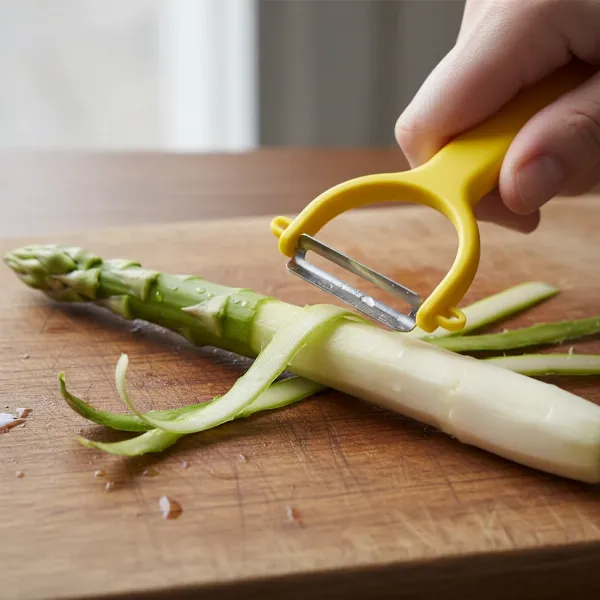 A hand holding an asparagus stalk on a cutting board, using a Y-peeler to remove the tough outer skin.
Top Considerations for Perfect Asparagus Texture
Beyond peeling, several other factors contribute to the perfect asparagus texture. Understanding these can help you avoid common pitfalls and ensure your asparagus is always a highlight of your meal.
Cooking Methods and Times
The cooking method significantly impacts texture. Asparagus can be roasted, grilled, steamed, blanched, or sautéed. Overcooking is the most common mistake, leading to mushy, lifeless spears. Aim for “al dente” – tender-crisp with a slight bite.
- Roasting: Toss peeled asparagus with olive oil, salt, and pepper. Roast at 400°F (200°C) for 8-12 minutes, depending on thickness, until tender-crisp. This method yields slightly caramelized, flavorful stalks.
- Grilling: Brush peeled spears with oil and season. Grill over medium-high heat for 3-5 minutes, turning occasionally, until tender with nice char marks.
- Steaming/Blanching: Steam for 3-5 minutes or blanch in boiling salted water for 2-4 minutes, then immediately transfer to an ice bath to stop cooking and preserve color. This results in bright green, crisp-tender asparagus.
Uniformity for Even Cooking
Peeling helps achieve uniform texture within a single stalk, but also consider the overall batch. If you have asparagus of varying thicknesses, separating them and adjusting cooking times accordingly will ensure everything cooks perfectly. Thicker peeled stalks may take slightly longer than thinner ones.
Seasoning Effectively
Asparagus has a delicate flavor that can be easily overpowered. Simple seasoning often works best: a drizzle of good olive oil, a sprinkle of sea salt, and freshly ground black pepper. Lemon zest, a squeeze of fresh lemon juice, or a dusting of Parmesan cheese are also wonderful additions that complement its natural taste without overshadowing it.
Conclusion
Mastering how to peel asparagus stalks is a game-changer for anyone seeking a superior culinary experience. By understanding the common peeler types, following a precise peeling technique, and selecting the right tool, you can effortlessly transform tough, fibrous spears into uniformly tender and elegant delights. Peeling not only ensures a consistently pleasant texture throughout the stalk but also significantly reduces food waste, making your asparagus dishes more enjoyable and economical.
With these insights, you’re now equipped to approach asparagus preparation with confidence and precision. So, grab your favorite peeler, embrace the technique, and elevate your next asparagus dish from good to truly exceptional. What new asparagus recipes will you create now that you know the secret to perfect texture?
Frequently Asked Questions
Do I always need to peel asparagus?
No, only thicker asparagus stalks (typically 1/2-inch in diameter or more) require peeling. Thin, pencil-sized spears are generally tender enough to cook without peeling, though trimming the dry ends is still recommended for all sizes.
What part of the asparagus stalk should I peel?
You should peel the lower two-thirds or bottom half of the asparagus stalk, starting just below the tip where the stalk begins to thicken. The very tip and upper portions are naturally tender and do not need to be peeled.
Is it better to peel or snap asparagus?
Peeling is generally preferred over snapping. Snapping often removes too much of the edible stalk, leading to waste, and the break point can be inconsistent. Peeling allows for precise removal of only the tough, fibrous outer layer, preserving more of the tender interior.
What kind of peeler is best for asparagus?
A sharp vegetable peeler, particularly a Y-peeler, swivel peeler, or one with a serrated blade, works best. Some specialized asparagus peelers are also highly effective, designed for minimal waste and easy handling of the long stalks.
How do I know if my asparagus needs peeling?
If the asparagus stalks are thick (over 1/2-inch in diameter) and feel rigid or woody when you gently bend them, they will likely benefit from peeling. Thin spears that are flexible and tender usually do not require peeling.
Can I peel asparagus in advance?
Yes, you can peel asparagus a day or two in advance. After peeling, store the spears in the refrigerator, ideally wrapped in a damp paper towel and placed in an airtight container or a plastic bag to maintain freshness.
What happens if you don’t peel woody asparagus?
If you don’t peel woody asparagus, the lower parts of the stalks will remain tough, stringy, and fibrous even after cooking. This can make the asparagus unpleasant to eat and detract from the dish’s overall texture and enjoyment.