Every home chef knows the frustration of a dull or unwieldy peeler, turning a simple task into a kitchen chore. From effortlessly peeling potatoes for a weeknight mash to precisely prepping delicate citrus zest, the right peeler can transform your cooking experience. But with a dizzying array of styles on the market, how do you choose the perfect one? The timeless debate often boils down to two primary designs: the efficient Y-peeler and the versatile swivel peeler. Understanding their unique strengths and ideal applications is key to finding your ultimate kitchen companion.
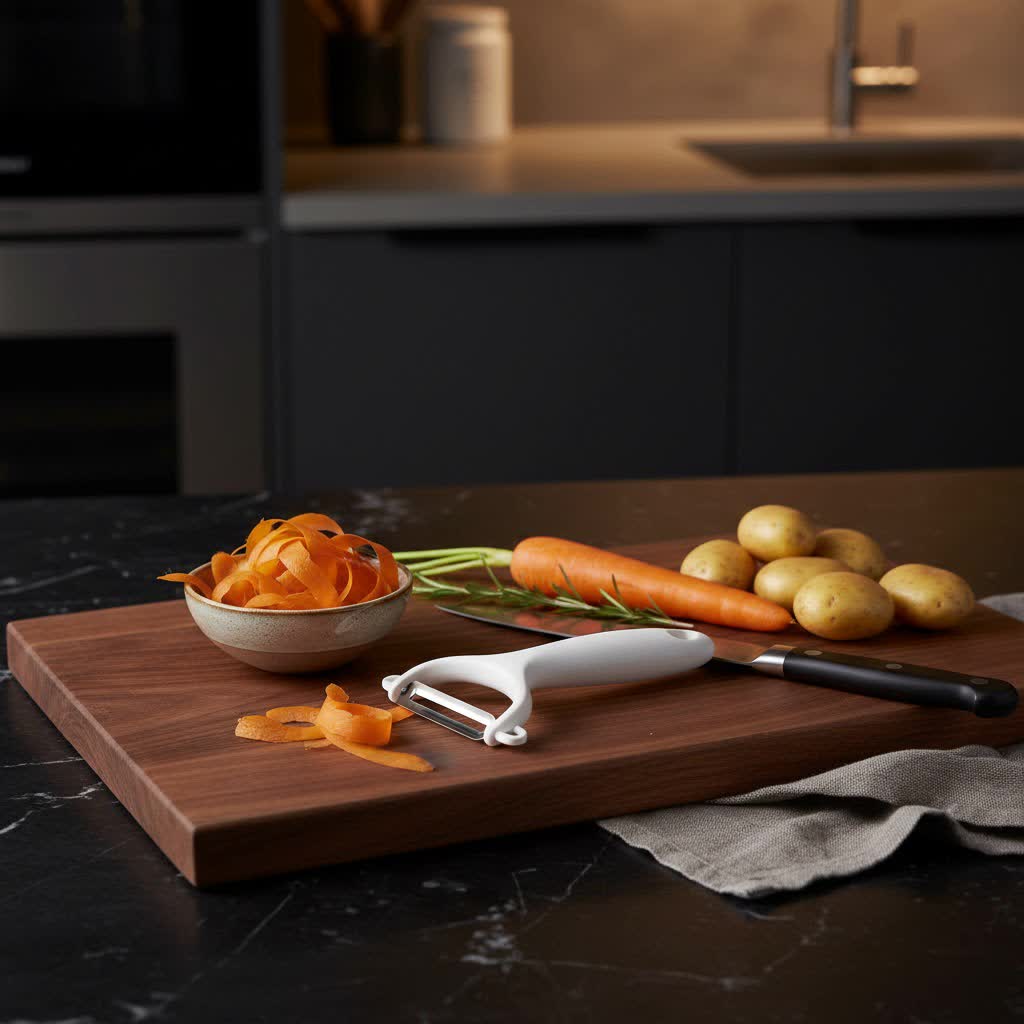
Common Peeler Types
The world of peelers, while seemingly simple, offers distinct designs tailored for different culinary tasks and user preferences. Beyond the basic function of removing skins, each peeler type presents its own set of advantages and challenges.
Y-Peeler
Characterized by its blade positioned perpendicular to a “Y”-shaped handle, the Y-peeler, often called a Swiss peeler, is a favorite among professional chefs for its speed and power. Its design encourages a downward motion, making it highly effective for tougher produce.
- Advantages and Disadvantages
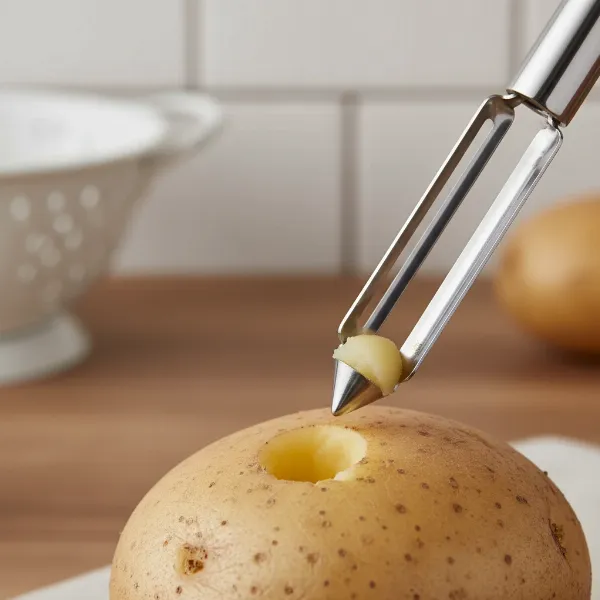
Y-peelers excel in efficiency, particularly when tackling larger, firmer vegetables like butternut squash, sweet potatoes, and potatoes. The horizontal blade design allows for powerful, efficient strokes and promotes a natural wrist alignment, which can significantly reduce strain during extended use or high-volume peeling. Many models also integrate a pointed tip, perfect for effortlessly digging out potato eyes or blemishes, streamlining your prep work. For ambidextrous users, many Y-peelers work comfortably in either hand, though some designs may feel awkward if not perfectly symmetrical. However, their wider blade can sometimes be less precise for smaller, more delicate items. - How to Use
Hold the Y-peeler with the blade facing away from you, gripping the handle comfortably. Apply firm, steady pressure as you pull the blade down the length of the fruit or vegetable. For rounder items, you can use a circular motion or short, individual strokes. The ergonomic grip allows for better control, making the peeling process feel almost effortless. - Notable Brands
Leading brands like OXO Good Grips offer popular Y-peelers known for their comfortable non-slip handles and sharp stainless steel blades, often including a built-in potato eyer. Kuhn Rikon also produces well-regarded Y-peelers, though some of their carbon steel models require hand washing to prevent rust.
|
Our Picks for the Best Peeler in 2026
As an Amazon Associate I earn from qualifying purchases.
|
||
| Num | Product | Action |
|---|---|---|
| 1 | Spring Chef Premium Swivel Vegetable Peeler, Soft Grip Handle and Ultra Sharp Stainless Steel Blades - Perfect Kitchen Peeler For Veggie, Fruit, Potato, Carrot, Apple - Black |

|
| 2 | TACGEA Vegetable Peeler for Kitchen, Potato Peelers for Fruit Straight Blade, Durable Non-Slip Handle, Set of 2 |
|
| 3 | Kuhn Rikon Original Swiss Peeler 3-Pack Red/Green/Yellow |
|
| 4 | Linden Sweden Original Jonas Vegetable Peeler - Rust Resistant Silver Carrot and Potato Peeler with Ergonomic Handle for Safety and Control - Dishwasher Safe and Compact - Made In Sweden - 6.5in |
|
| 5 | OXO Good Grips Y-Peeler |
|
| 6 | 2PCS Premium Vegetable Peeler with Wooden Handle and Bottle Opener, Multi-Functional Vegetable Peeler, Stainless Steel Blade Kitchen Tool for Fruit |
|
| 7 | Rainspire Vegetable Peeler Potato Peelers for Kitchen, Sharp Stainless Steel Blades Veggie, Comfortable Handle Fruit Peeler, Carrot Peeler Apple Peeler Dishwasher Safe Black, 1-Pack |
|
| 8 | FUHUY Vegetable, Apple Peelers for kitchen, Fruit, Carrot, Veggie, Potatoes Peeler, Y-Shaped and I-Shaped Stainless Steel Peelers, with Ergonomic Non-Slip Handle & Sharp Blade, Good Sturdy (2PCS) |
|
| 9 | KitchenAid Classic Euro Peeler, 8.6 inches, Black |
|
| 10 | OXO Good Grips Swivel Peeler |
|
Swivel Peeler
The swivel peeler, also known as a straight peeler or I-peeler, features a blade that is parallel to a longer, pen-like handle. Its distinguishing characteristic is the flexible blade that pivots, adapting to the contours of the produce.
- Advantages and Disadvantages
Swivel peelers are often the go-to for beginners, offering a familiar, intuitive grip akin to holding a pen. The pivoting blade is highly adaptable, making it excellent for navigating the curves of fruits and vegetables such as apples, carrots, cucumbers, and even oddly shaped produce. This flexibility ensures thin, precise peels, minimizing waste and promoting a more detailed peeling technique. Swivel peelers are typically universal, allowing both right- and left-handed users to peel in either direction with ease. While highly versatile, they might be less efficient for very large, tough-skinned vegetables compared to the powerful strokes of a Y-peeler. - How to Use
Hold the swivel peeler like a pen, with the blade aligned with the length of the vegetable. You can peel towards or away from your body, allowing the blade to glide smoothly over the surface. The swiveling action helps the blade hug the natural contours, ensuring consistent results. - Notable Brands
The OXO Good Grips Pro Swivel Peeler is highly praised for its ergonomic, non-slip handle and durable stainless steel blade, often featuring a convenient potato eye remover. Rösle offers high-quality stainless steel swivel peelers, known for their elegant design and durability.
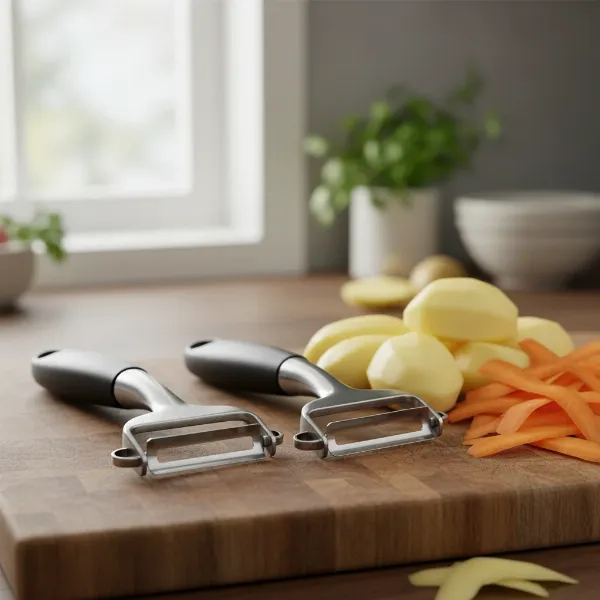 Close-up of a Y-peeler and a swivel peeler side-by-side on a cutting board with peeled vegetables, highlighting their different blade orientations for a peeler comparison
Serrated Peeler
A specialized variant, the serrated peeler features a blade with small, saw-like teeth along its edge, setting it apart from its smooth-bladed counterparts.
- Advantages and Disadvantages
The serrated edge provides exceptional grip, making it the preferred tool for produce with soft, slippery, or waxy skins that regular peelers struggle with. Think of ripe tomatoes, peaches, kiwis, bell peppers, mangoes, or even ginger—the teeth gently cut into the flesh without squishing the delicate fruit, preventing slips and reducing the risk of accidental cuts. This specialized design, while excellent for specific tasks, may not be as efficient for general-purpose peeling of firm vegetables. - How to Use
Apply gentle pressure with the serrated peeler, allowing the teeth to grab onto the skin. Use a light, controlled stroke, peeling away from your body. The serrated blade will effortlessly remove the skin, leaving the delicate flesh intact. Beyond peeling, it’s also excellent for quickly zesting citrus, removing wide strips of rind without the bitter white pith. - Suitable Foods
This peeler is indispensable for soft-skinned fruits and vegetables such as tomatoes, peaches, kiwis, bell peppers, mangoes, eggplant, and ginger. It also excels at creating elegant citrus zests.
Comparing Peeler Styles
Choosing between a Y-peeler and a swivel peeler often comes down to personal technique and the types of produce you commonly prepare. While both aim to remove skins efficiently, their design philosophies lead to different strengths.
Detailed Comparison Table
| Feature | Y-Peeler (Swiss Peeler) | Swivel Peeler (Straight Peeler) | Serrated Peeler |
|---|---|---|---|
| Blade Orientation | Perpendicular to handle (horizontal) | Parallel to handle (vertical) | Variable (can be Y or Swivel), with serrated teeth |
| Grip Style | Hand wraps around “Y” shape, natural wrist alignment | Pen-like grip, familiar and intuitive | Variable, depends on handle type (often swivel style) |
| Ideal For | Large, firm, tough-skinned vegetables (potatoes, sweet potatoes, butternut squash), high-volume peeling | Round, curved, and oddly shaped produce (carrots, apples, zucchini), precision peeling, delicate items | Soft, slippery, or waxy skins (tomatoes, peaches, kiwis), citrus zesting |
| Efficiency | Fast, powerful strokes for heavy-duty tasks | Precise, controlled strokes for detailed work | Prevents slipping on tricky skins, often faster than paring knife for soft produce |
| Control/Safety | Excellent control, blade away from knuckles, reduces wrist strain | Good control, blade adapts to curves | Excellent grip on slippery surfaces, reduces accidental cuts |
| Left-Handed Use | Can be ambidextrous if symmetrical; some designs awkward | Generally universal, peels in both directions | Generally universal if swivel style |
| Common Materials | Stainless steel, carbon steel | Stainless steel, carbon steel | Stainless steel |
| Add-on Features | Often includes potato eye removers | Often includes potato eye removers | Sometimes includes potato eye removers |
Buying Guide: Choosing Your Ideal Peeler
Selecting the right peeler can make a significant difference in your kitchen workflow and overall cooking enjoyment. Consider these factors to ensure you pick a tool that truly suits your needs.
Key Factors to Consider
The longevity and performance of your peeler largely depend on its construction and materials. Investing a little time in understanding these aspects can save you frustration in the long run.
- Blade Material: Stainless Steel, Ceramic, or Carbon Steel
Most peelers feature blades made from stainless steel, which is highly popular due to its durability, resistance to corrosion, and dishwasher-safe properties. Stainless steel blades hold a good edge and are easy to maintain. Carbon steel blades, while often exceptionally sharp, are prone to rusting if not thoroughly hand-washed and dried immediately after use. They offer superior sharpness but require more meticulous care. Ceramic blades are also very sharp and resistant to corrosion, but they can be more brittle and prone to chipping if dropped or knocked against other utensils. - Handle Design: Ergonomic and Comfortable Grip
A comfortable and secure grip is paramount for safety and ease of use. Look for handles made from materials like silicone, rubber, or textured plastic, which provide a non-slip surface even when your hands are wet. An ergonomic design that fits well in your hand will prevent fatigue during extended peeling sessions, especially when prepping large quantities of vegetables. The overall weight and balance of the peeler also contribute to control; a well-balanced tool feels like a natural extension of your hand. - Durability and Lifespan
A quality peeler should withstand regular use without dulling quickly or breaking down. Stainless steel construction generally offers excellent durability. While peelers don’t last forever and blades eventually dull, a well-made peeler from a reputable brand will maintain its sharpness and structural integrity for a considerable period. - Price and Brand
Peelers are generally inexpensive kitchen tools, but prices can vary based on brand reputation, materials, and design. Brands like OXO Good Grips and Kuhn Rikon consistently receive high marks for performance and value. While a higher price can sometimes indicate better materials and craftsmanship, there are many affordable options that deliver excellent results.
Expert Advice
Navigating the options can be simpler with a few insights from experienced cooks. Choosing wisely and maintaining your tools will ensure efficient kitchen prep for years.
-
How to Choose the Right Peeler for Your Needs
The “best” peeler is ultimately a matter of personal preference and the specific tasks you perform most frequently. Many culinary experts and home cooks agree that having both a Y-peeler and a swivel peeler on hand provides the most versatility. A Y-peeler is often preferred for rapid peeling of large, tough vegetables, while a swivel peeler excels at delicate work and conforming to irregular shapes. Consider your hand size, wrist strength, and preferred peeling technique. If you frequently handle soft-skinned produce, a serrated peeler is an invaluable addition.“Different ingredients, different missions. Maximum performance.” – Click Until Buy, Kitchen Gadget Reviewer
-
Maintenance Tips: Cleaning and Storage
Proper care extends the life of any peeler. For stainless steel peelers, many are dishwasher-safe, offering convenient cleaning. However, to preserve blade sharpness, hand-washing with warm water and a soft brush is often recommended, followed by immediate drying to prevent water spots or potential corrosion. Carbon steel blades must be hand-washed and dried thoroughly to avoid rusting. Store peelers safely in a drawer or with a blade cover to protect the sharp edge and prevent accidental cuts. -
Common Mistakes to Avoid When Buying a Peeler
One common mistake is prioritizing novelty over functionality. While unique designs can be appealing, a peeler’s core purpose is efficient and safe skin removal. Avoid overly heavy or unbalanced peelers, as they can cause hand fatigue. Skipping on a comfortable, non-slip handle is another oversight that can lead to discomfort or even accidents. Finally, neglecting to replace a dull peeler is a safety hazard and makes peeling more difficult, so remember that peelers have a finite lifespan.
Top-Rated Peelers for Your Kitchen
Based on extensive testing and user reviews, several peelers consistently rise to the top for their performance, durability, and ergonomic design. Here are some standout options across different categories.
Detailed Reviews
Finding the ideal peeler means balancing efficiency, comfort, and the specific demands of your culinary repertoire. These top picks offer excellent solutions for a range of peeling tasks.
-
OXO Good Grips Pro Y-Peeler
This Y-peeler is a perennial favorite, often lauded as the best overall vegetable peeler. Its ergonomic design features a soft, non-slip handle that is comfortable and secure in both small and large hands, minimizing fatigue during extended use. The sharp, stainless steel blade glides effortlessly through tough skins like potatoes and sweet potatoes, making quick work of large peeling tasks. It typically includes a built-in potato eyer, adding to its convenience. While exceptionally efficient, some left-handed users might find its standard design slightly less intuitive than a symmetrical alternative. -
OXO Good Grips Pro Swivel Peeler
For those who prefer the traditional straight peeler style, the OXO Good Grips Pro Swivel Peeler is an excellent choice, particularly for left-handed users due to its double-sided blade that peels in either direction. It features an agile, flexible blade that adapts beautifully to the curves of produce like carrots and apples, providing precise, thin peels. The comfortable, non-slip handle ensures a secure grip, and a metal divot at the end is perfect for easily removing potato eyes. Some users with smaller hands might find its handle slightly bulky. -
Kuhn Rikon Original Swiss Peeler
Renowned for its incredible sharpness and value, the Kuhn Rikon Original Swiss Peeler is a lightweight Y-style peeler that many chefs adore for its precision. Its carbon steel blade makes it exceptionally effective, but this material requires hand washing and immediate drying to prevent rust. Despite its need for careful maintenance, its low cost and outstanding performance make it a fantastic option for those seeking a highly effective tool on a budget.
Conclusion
Choosing between a Y-peeler and a swivel peeler ultimately comes down to your personal peeling style, hand comfort, and the types of produce you frequently prepare. While the Y-peeler offers powerful, efficient strokes ideal for larger, tougher vegetables and preferred by many professionals, the swivel peeler provides intuitive control and adaptability for curved or delicate items, often favored by home cooks. Don’t overlook the specialized serrated peeler for soft, slippery skins. Ultimately, having a selection of peelers, each suited to specific tasks, can elevate your kitchen efficiency and make meal prep a joy rather than a chore. Which peeler will become your indispensable kitchen ally?
Frequently Asked Questions
Is a Y-peeler truly better than a swivel peeler?
Neither is universally “better”; it depends on individual preference and task. Y-peelers are generally faster and more efficient for large, firm vegetables, while swivel peelers offer greater adaptability and precision for varied shapes and delicate items. Many experts recommend having both for maximum versatility.
Can left-handed people use both Y and swivel peelers?
Swivel peelers are typically universal as their blades peel in both directions. Many Y-peelers are also designed to be ambidextrous, though some non-symmetrical Y-peelers might feel awkward for left-handed users.
What foods are best suited for a serrated peeler?
Serrated peelers excel at peeling produce with soft, delicate, or waxy skins, such as tomatoes, peaches, kiwis, bell peppers, and mangoes, as their teeth prevent slipping and tearing. They are also excellent for zesting citrus.
How often should I replace my vegetable peeler?
Peelers should be replaced when their blades become dull, as a dull blade is less efficient and can be more dangerous. The lifespan varies by material and usage, but most kitchen tools, including peelers, benefit from periodic replacement.
Are there any peelers specifically designed for people with arthritis or limited grip strength?
Yes, some brands offer peelers with extra-thick, cushioned, or ergonomically designed handles that are easier and more comfortable to grip for individuals with arthritis or reduced hand strength. Palm peelers are also suggested for wrist or grip issues.